
 Türkçe
  English
  Русский
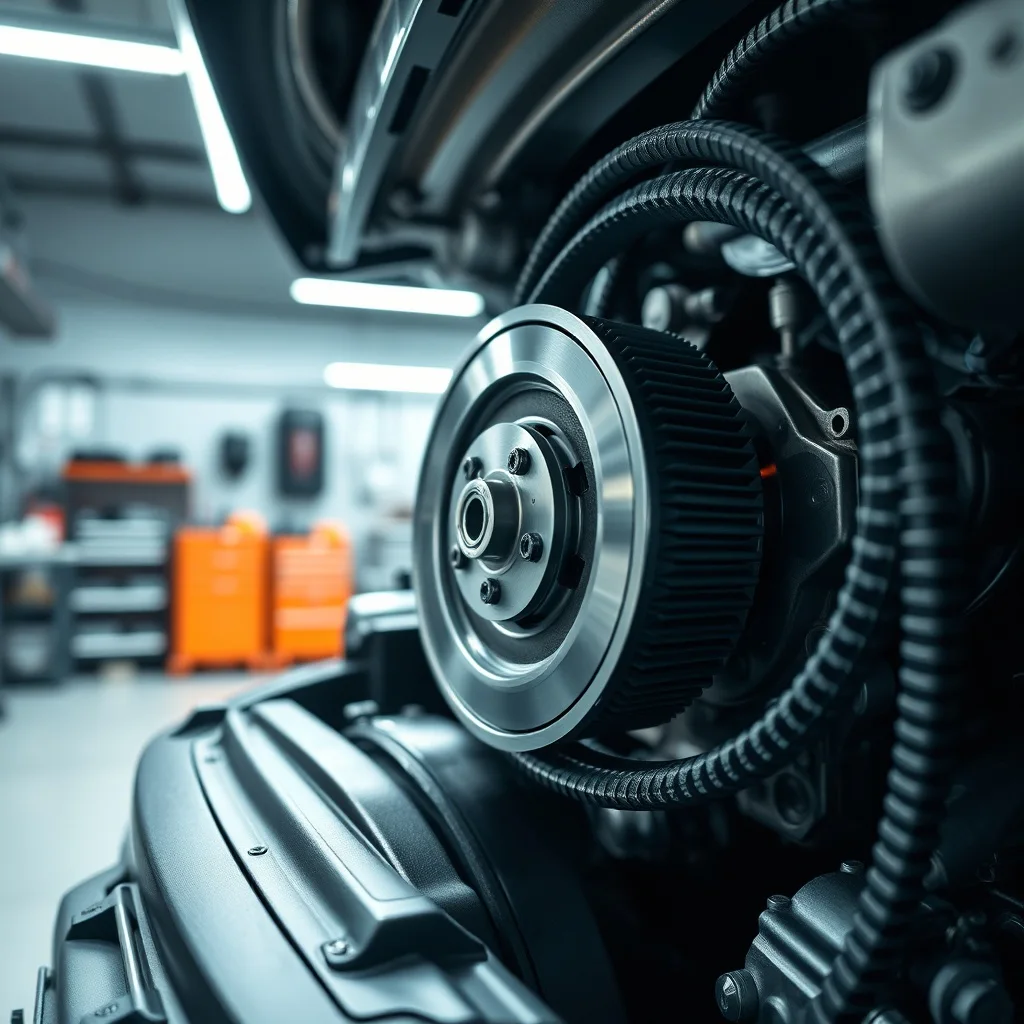
The crankshaft pulley rotates with the engine's crankshaft and, through the belt system, drives auxiliary components such as the alternator and water pump. Choosing the right crankshaft pulley directly affects engine efficiency and component lifespan. In this guide, we examine what to consider when selecting a crankshaft pulley during vehicle maintenance.
The crankshaft pulley rotates with the engine's crankshaft and transmits power through the belt system to auxiliary components such as the alternator, power steering pump, and air conditioning compressor. The right crankshaft pulley choice directly affects the smooth operation of these systems. A wrong choice, on the other hand, can accelerate belt wear, create vibration, and reduce the engine's overall efficiency.
Among the most important factors to consider when choosing a crankshaft pulley are the pulley's size, tooth profile, and material quality. Every vehicle model needs a specific crankshaft pulley compatible with its engine structure. In our category offering a wide product range, there are crankshaft pulley models for different vehicle types. To determine the most suitable one for your vehicle, referring to your owner's manual or original part number is the most reliable approach.
In addition, the part's manufacturing quality and durability should be taken into account when selecting a pulley. A quality crankshaft pulley provides long-lasting use and prevents unexpected failures. Choosing the right part not only preserves engine performance but also helps you reduce maintenance costs.
The Primary Function of the Crankshaft Pulley in the Engine System
There is a constant rhythm at the heart of a vehicle engine, and one of the main components providing this rhythm is the crankshaft pulley. Although many drivers know it only as a belt pulley, the crankshaft pulley's role is critical in maintaining the engine's vital functions.
Its basic task is to transmit the movement of the crankshaft, the engine's main rotating shaft, to auxiliary systems. The crankshaft pulley is directly attached to the end of the crankshaft. The linear motion generated by combustion in the engine and transmitted to the crankshaft is converted into circular rotation by the crankshaft pulley, powering the belt system.
Criteria to Consider When Choosing the Right Crankshaft Pulley
Selecting a crankshaft pulley during vehicle maintenance is a critical step that requires determining the right part. A wrong choice can negatively affect engine performance and even lead to serious problems. So, what should you consider when choosing the right crankshaft pulley?
Vehicle Make and Model Compatibility
The first and most important criterion is to choose a crankshaft pulley that is fully compatible with your vehicle's make and model. Each vehicle manufacturer develops specific pulley specifications tailored to the engine design. Therefore, you must verify your vehicle's production year, engine type, and model information.
Product Code Matching
Part codes determined by the original equipment manufacturer (OEM) are the most reliable way to make the right choice. Check the product code on your vehicle's existing crankshaft pulley or in the parts catalog. This code directly reflects the technical specifications and compatibility of the part. Similar-looking pulleys manufactured for different vehicles may not be technically interchangeable.
Key Check Points
The main criteria to consider when selecting a crankshaft pulley are:
- Pulley diameter: The original diameter values must be adhered to for the correct operation of the engine belt system.
- Hole diameter and bolt count: The connection point to the crankshaft must be compatible.
- Edge profile: The groove structure where the timing belt or V-belt sits must match the belt type.
- Balancing features: Some pulleys may have internal balancers; these features are vehicle-specific.
The Importance of Original Part Compatibility
Spare parts with quality standards close to the original should be preferred. Each product in the crankshaft pulley category serves different vehicle configurations. For example, product codes such as 7001010, 7003010, or 7015010G are intended for specific vehicle types and should not be chosen at random.
After identifying the correct product code, we recommend carefully examining the part's physical characteristics and technical descriptions. An incompatible pulley can cause problems such as belt slippage, excessive vibration, and premature wear.
Crankshaft Pulley Wear Symptoms and Maintenance Timing
The crankshaft pulley is one of the hardest-working and continuously rotating components of the engine. Just as choosing the right crankshaft pulley is important, regular maintenance that extends the life of this part and early detection of wear are equally critical. The wear process usually begins gradually and invisibly, but knowing its symptoms can prevent larger failures and costly engine damage.